
Why Learn German? Career Opportunities, Study in Germany & Future Scope
Learning a foreign language can create new opportunities in education, employment and personal development. Among the many languages spoken around the world, German is an excellent choice for students and professionals interested in international opportunities.
Germany is known for its strong economy, globally recognised companies, world-class universities and vocational training programmes. German is also spoken in Austria, Switzerland, Luxembourg and other parts of Europe.
Whether you want to study in Germany, explore an international career, pursue Ausbildung or simply learn a new language, German can be a valuable skill for your future.
In this guide, discover the benefits of learning German, career possibilities, educational opportunities and the different language levels from A1 to C2.
- Why Should You Learn German?
German is one of the most widely spoken native languages in Europe and plays an important role in international business, science, technology and education.
Here are some reasons why learning German can be beneficial:
- International career opportunities: German can help you communicate with German-speaking employers, colleagues and customers.
- Higher education: German proficiency is important for many German-taught university programmes.
- Ausbildung in Germany: Language skills are essential for vocational training and workplace communication.
- Professional development: German can strengthen your profile in engineering, IT, healthcare, hospitality and other industries.
- Cultural understanding: Explore German literature, music, films, history and traditions.
- International communication: German is used in Germany, Austria, Switzerland, Luxembourg and other regions.
- Career Opportunities After Learning German
Germany has one of the world's strongest industrial economies and is home to several internationally recognised companies.
Some well-known German companies include BMW, Mercedes-Benz, Siemens, Bosch, SAP and Volkswagen.
German language proficiency can be useful in various professional sectors.
Engineering and Manufacturing
Germany has a strong reputation for automotive engineering, mechanical engineering, electrical engineering and industrial manufacturing.
Information Technology
IT professionals interested in international opportunities can benefit from German communication skills, particularly when working with German-speaking clients and teams.
Healthcare and Nursing
Germany's healthcare sector recruits qualified professionals. International candidates must meet the applicable qualification recognition, professional registration and language requirements.
Hospitality and Tourism
Hotels, restaurants, tourism organisations and hospitality businesses offer different professional and vocational opportunities.
Logistics and Supply Chain
Germany's logistics sector includes transportation, warehousing, distribution and supply chain operations.
Learning German can improve communication in these workplaces, although employment depends on qualifications, experience and employer requirements.
- Study in Germany: Educational Opportunities for International Students
Germany is a popular destination for students from around the world.
Its universities are recognised for academic quality, research opportunities and a wide range of programmes.
Many public universities offer tuition-free or low-tuition education for eligible programmes. However, fees vary by university, state and programme. Students should also consider living expenses, insurance and semester contributions.
Learning German can help students:
- Communicate with professors and classmates.
- Understand German-taught academic programmes.
- Manage everyday activities.
- Participate in internships and student activities.
- Integrate into German society.
Students applying for English-taught programmes should check the specific language requirements of their chosen university.
- Ausbildung in Germany: Learn Skills and Build a Career
Are you interested in developing professional skills while gaining practical workplace experience?
Ausbildung is Germany's vocational education and training system. It combines practical training at a company with theoretical education at a vocational school.
International candidates may explore Ausbildung opportunities in different sectors.
Popular fields include:
- Nursing and healthcare
- Hotel management
- Hospitality and restaurant services
- Professional chef training
- Logistics and warehouse operations
- Retail and business administration
- Technical and industrial occupations
German language proficiency is particularly important because trainees need to understand instructions, attend vocational classes and communicate with colleagues.
Many employers look for B1 or B2 proficiency, depending on the occupation and programme.
Candidates must also satisfy educational, employer selection and visa requirements.
EDEXO offers guidance to students interested in exploring Ausbildung opportunities in Germany.
- German Language Levels Explained: A1 to C2
German language courses generally follow the Common European Framework of Reference for Languages (CEFR).
There are six proficiency levels, beginning with A1 and progressing to C2.
German A1 – Beginner
A1 is the starting point for students with no previous German knowledge.
You will learn:
- German alphabet and pronunciation
- Greetings and introductions
- Numbers, dates and time
- Basic vocabulary
- Family and daily activities
- Simple sentence formation
- Essential grammar
After A1, you can introduce yourself, ask simple questions and communicate in basic everyday situations.
German A2 – Elementary
A2 develops your ability to communicate about familiar subjects.
You will learn:
- Everyday conversations
- Shopping and travel vocabulary
- Family and work-related topics
- Past tense basics
- Sentence formation
- Common expressions
After A2, you can manage routine conversations and understand frequently used expressions.
German B1 – Intermediate
B1 helps you become an independent German language user.
You will learn:
- Expressing opinions
- Describing experiences
- Discussing future plans
- Understanding familiar conversations
- Writing connected texts
- Communicating in everyday situations
B1 is also a commonly sought language level for certain Ausbildung opportunities.
German B2 – Upper Intermediate
B2 focuses on more advanced communication.
You will learn:
- Complex grammar structures
- Detailed discussions
- Professional vocabulary
- Structured writing
- Understanding longer texts
- Expressing arguments and viewpoints
This level can be useful for professional and academic communication.
German C1 – Advanced
C1 develops advanced proficiency for demanding academic and professional environments.
You will learn to understand complex texts, communicate fluently and express ideas with precision.
German C2 – Proficient
C2 is the highest CEFR proficiency level.
It focuses on understanding virtually everything heard or read and expressing complex ideas with accuracy and flexibility.
- How Long Does It Take to Learn German?
The time required to learn German depends on your starting level, study schedule, practice habits and learning environment.
A structured learning programme should include:
- Speaking practice
- Listening exercises
- Reading comprehension
- Writing activities
- Grammar lessons
- Vocabulary development
- Regular revision and assessments
Consistent practice outside the classroom is important for improving confidence and fluency.
Students should select their next course according to their actual proficiency rather than simply choosing a level based on their previous course certificate.
- Is German Useful for Working and Living in Germany?
German can be an important skill for individuals planning to work or live in Germany.
Language requirements depend on the immigration route, profession and individual circumstances.
For example:
- Certain Opportunity Card applicants can qualify through German A1 or English B2 under the points system.
- Some qualification recognition pathways require German A2.
- Certain healthcare and regulated professions have specific language requirements.
- Settlement permit applicants may need to demonstrate German proficiency.
- EU Blue Card holders may qualify for an earlier settlement permit with B1 German than with A1, subject to other eligibility conditions.
Always check the current official immigration requirements before applying for a visa or residence permit.
Learning German does not automatically guarantee employment, a visa or permanent residence.
- Why Choose EDEXO for German Language Classes?
Learning a foreign language requires proper guidance, regular practice and a structured course.
EDEXO offers German language training for beginners, students, graduates and working professionals.
Our German language programmes include:
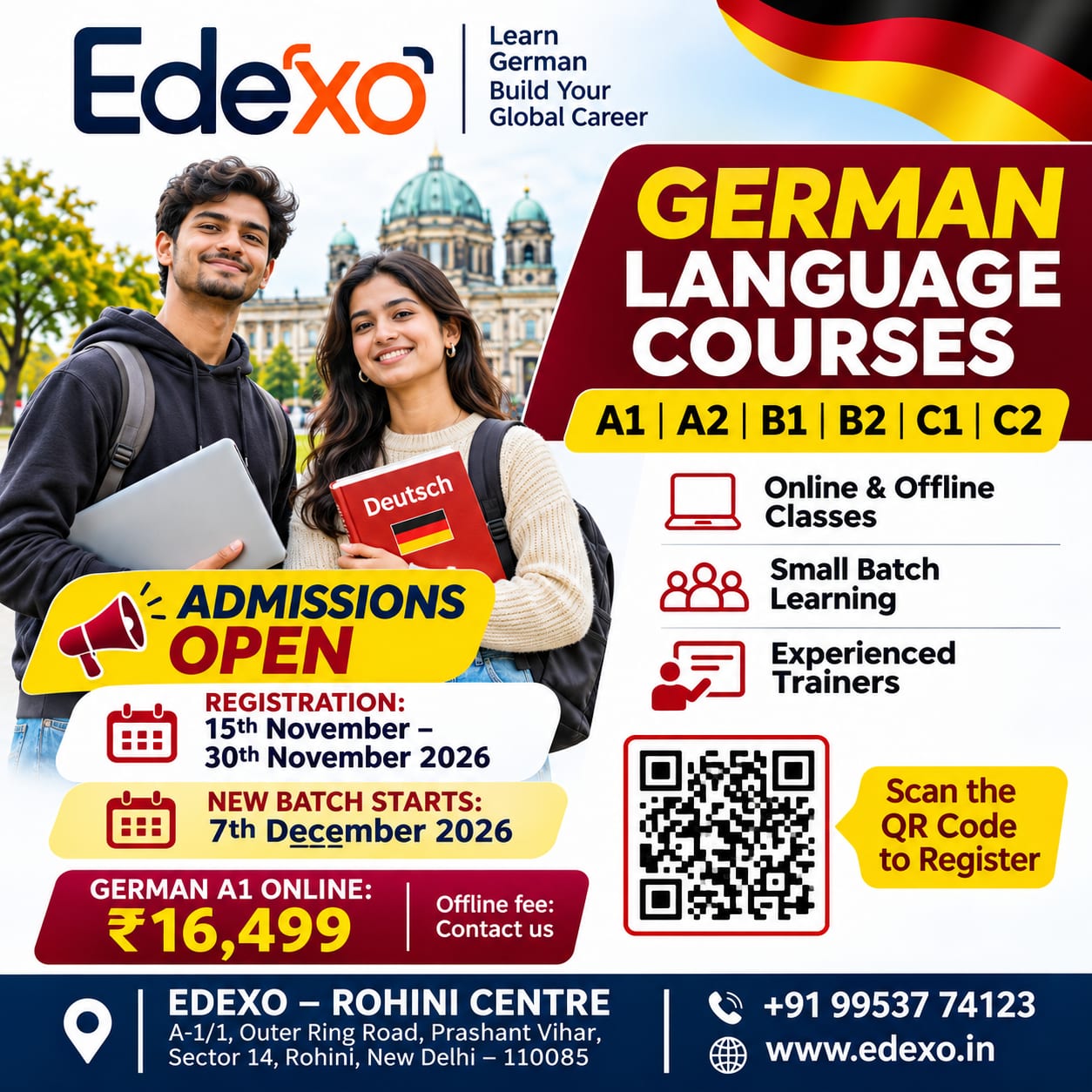
- German A1 to C2 courses
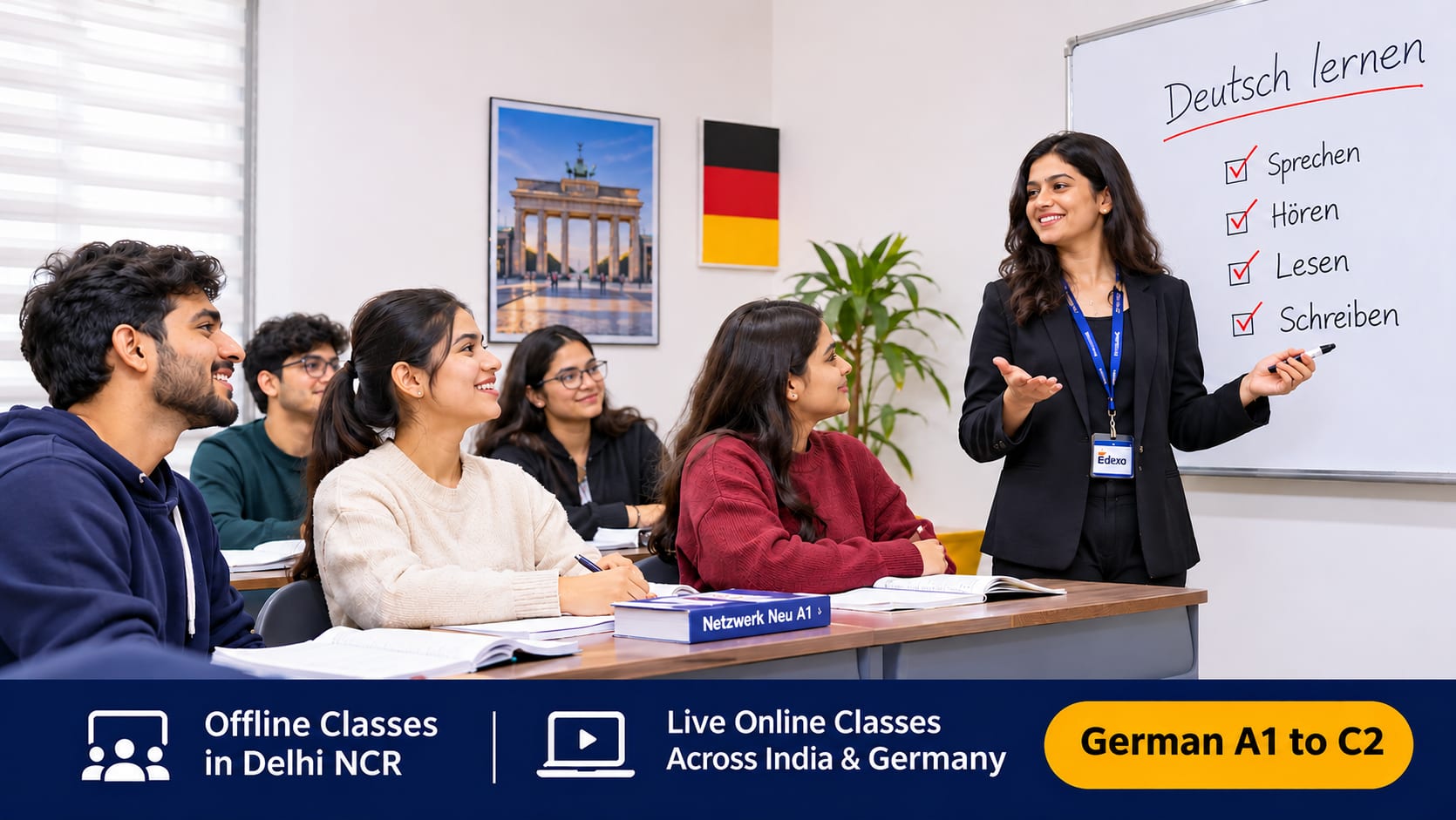
- Live online German classes
- Offline classroom learning
- Weekday and weekend batches
- Speaking and pronunciation practice
- Listening, reading and writing activities
- Grammar and vocabulary development
- Study materials and revision resources
- Practice tests and examination preparation support
- Guidance for students interested in Ausbildung in Germany
Students can choose an appropriate learning format based on their schedule and language goals.
- Who Should Join a German Language Course?
German language classes are suitable for:
- School and college students
- Graduates planning international education
- Candidates interested in Ausbildung
- Nursing and healthcare professionals
- Engineering and IT graduates
- Hotel management students
- Hospitality and tourism professionals
- Working professionals
- Individuals interested in German culture and travel
Complete beginners can start with A1, while students with previous German knowledge can explore an appropriate higher level after an assessment.
- Start Your German Learning Journey with EDEXO
Learning German can help you develop communication skills and explore opportunities in international education and professional environments.
Whether your goal is to study in Germany, pursue Ausbildung, develop your career or learn a new language, building a strong foundation is the first step.
At EDEXO, you can explore structured German language programmes from A1 to C2 through online and offline classes.
Start learning German with EDEXO and take your next step towards international opportunities!
Enquire About German Classes at EDEXO
- Courses: German A1, A2, B1, B2, C1 and C2
- Learning formats: Online and offline
- Batches: Weekday and weekend options
- Free demo class: Available on enquiry
Website: https://www.edexo.in/
Contact EDEXO to find the right German course for your goals.
Frequently Asked Questions About Learning German
- Can I learn German without prior knowledge?
Yes. You can start with German A1 even if you have never studied the language before.
- Which German level is required for Ausbildung?
Many Ausbildung employers look for B1 or B2 German proficiency. Requirements vary according to the occupation and employer.
- Is German compulsory for studying in Germany?
Not for every programme. German-taught programmes generally require German proficiency, while English-taught programmes may accept English language qualifications.
- Can I learn German online from India?
Yes. Live online German classes allow students to learn from anywhere in India.
- What are the six German language levels?
The six CEFR levels are A1, A2, B1, B2, C1 and C2.
- Does German help in getting a job in Germany?
German proficiency can improve communication and may strengthen your employment profile. However, jobs also depend on qualifications, experience and employer requirements.
- Is German useful for nursing professionals?
Yes. German is important for communication with patients, colleagues and healthcare institutions. Professional recognition and language requirements also apply.
- How can I join EDEXO German classes?
Visit https://www.edexo.in/ and contact the EDEXO team to enquire about course levels, batch schedules and free demo classes.